One Month in the Vegetable & Herb Garden
Day Thirty-Six: Reflections and Changes in the Garden
Challenges with Pests and Plant Health
Bug Bugs BUGS! Whenever I head out to the Sliver and Bite vegetable / herb garden and see leaves that are crispy or chewed by bugs, cocoons, and signs of leaf discolouration, I feel a mix of sadness and defeat. I sympathise with the plants, knowing it’s not their fault if I, as the gardener, have overwatered them, used the wrong soil, or placed the garden in a spot that doesn't get enough sunlight.

Addressing Soil Issues and Improving Conditions
With ongoing problems caused by gnats, I decided to till the soil - turning it over and digging. However, soil tilling shouldn't be done when the soil is too wet, frozen, or already has a healthy structure with biennials growing. Essentially, if it’s not necessary, it's best avoided.
To enrich the soil, I added compost after noticing the garden’s growth had stalled. I also increased the height of the garden bed by 20 cm, as it had sunk and some sections were not receiving any sunlight.
Learning from Mistakes and Experimenting
Through my constant efforts, I observed that some leaves began to turn yellow after I removed the straw mulch and replaced it with lupin mulch. The high amount of beneficial fertiliser elements caused root shock due to excess nitrogen, calcium, and potassium.
Keen to improve, I started listening to podcasts and watching videos about troubleshooting, companion planting, and garden bed arrangement.
With minimal growth, I decided to uproot the plants in my large raised bed and rearrange them based on what I had learned.
Relocating and Additions for Better Results
I removed a sweet basil plant from the shaded section of the bed and potted it, hoping to give it a better chance to thrive. The Thai basil was moved from the far right to the far left, together with the addition of Thai basil seedlings.
Beside the Thai basil I then planted a line of garlic chives to help control insects along with the relocated mint.
Next, I relocated capsicum plants. Their roots hadn’t spread much, so I was fortunate that moving them caused little disturbance. Owing to the cooler soil, the capsicums are growing slowly.
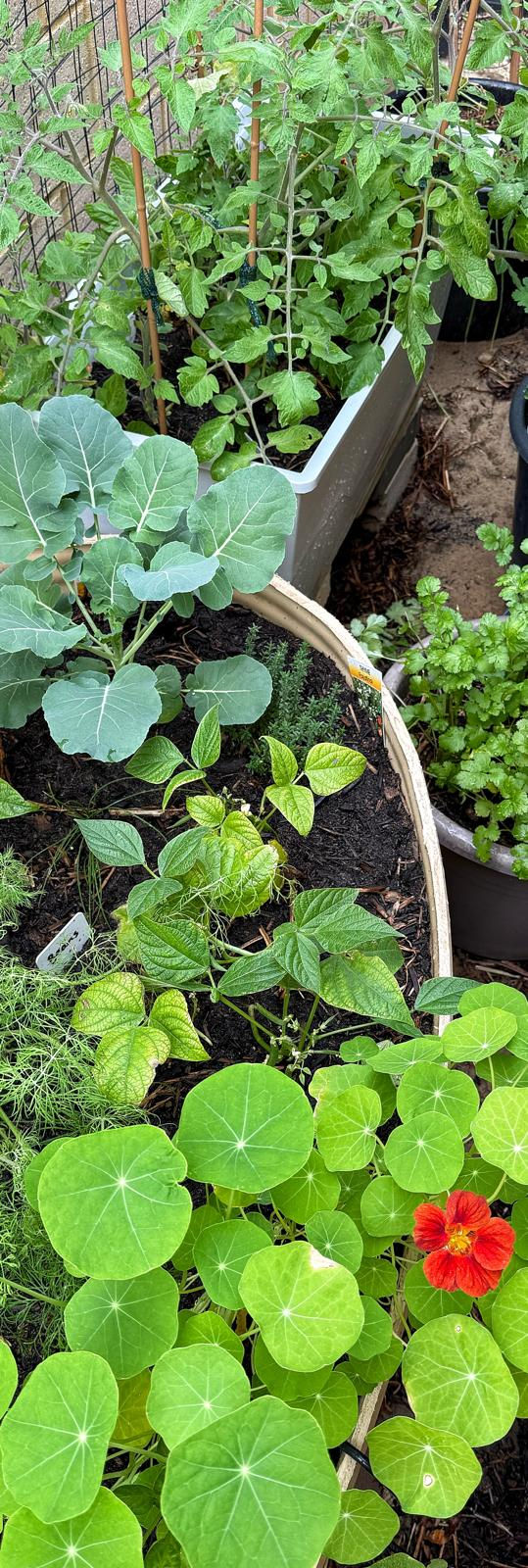
In the centre right, I placed garlic chives, nasturtiums, and dill. Dill acts as a deterrent to aphids, spider mites, cabbage moths, and tomato hornworms. Nasturtiums help control whiteflies and cucumber beetles, and their brightly coloured flowers lure pests, functioning as trap plants. Their pungent smell also helps repel unwanted insects.
The following row contains a relocated bean plant and new bean seedlings.
At the far right, I placed the relocated broccoli, which had previously been rescued from pests. With care, it has grown new foliage, which is heartening. There was space for the relocated thyme.
Where possible, I dotted marigolds throughout. Marigolds are excellent companion plants for basil, sage, and thyme, and they help prevent nematodes, aphids, and beetles.

Progress in Other Garden Beds
My raised garden bed, which houses cos lettuce and baby spinach, also contains garlic chives and dill to ward off pests. The lettuce has been doing well, as this is the perfect time for planting.
I recently purchased some leek seedlings, as they prefer autumn and winter conditions. After removing them from cell trays, I planted them in slightly larger pots so they can grow a bit more before being transplanted. I am excited to try growing them with PVC pipe to encourage thicker bases and longer growth, allowing for a greater harvest of the middle white section.

A Month of Knowledge
Reflections After One Month
At the one-month mark, my advice is simple: don’t give up. The lessons I have learned are genuinely profound, and with this new experience, I feel confident that heading into a second autumn will be far more successful. Everything I know now will make a difference.
Motivation and Respect for Food
My first harvest is a major motivation, but the journey so far has been just as valuable. This experience has unlocked knowledge that I carry over into the kitchen and has given me a greater respect for food and the process it undergoes before ending up in a dish.


Comments