Day Twenty-Eight: Turning Challenges into Growth in the Sliver & Bite Garden
- Apr 12
- 3 min read
Day Twenty-Eight Overview
On day twenty-eight, a notable shift occurred in the Sliver and Bite garden. Progress seemed to come to a standstill, with plant growth halting and a gnat infestation taking hold. The mulch on top of the garden beds had become matted, compounding the issue. Recognising the risk of losing nearly a month’s worth of work, I realised I needed to act decisively to safeguard the garden’s progress.
Below is a detailed account of the steps I took to address and resolve these challenges and rectification.

Step One: Removal
The first course of action was to remove the top layer of straw used as mulch. This straw, chosen as an affordable way to reduce evaporation and prevent lower leaves from resting on the soil, had unfortunately become a problem. Underneath, the mulch was badly matted and had created a habitat for gnats. The base of several plants had started to change colour, a warning sign for potential rot. To mitigate further problems, I immediately pulled the straw away from the stems. Another unforeseen complication was the presence of seeds within the straw, which sprouted into small grass blades, inadvertently increasing my workload.
To thoroughly address these issues, I completely removed the straw from the beds. This removal seemed to bring relief to the garden, and I carefully extracted any sprouting grass, preparing the beds for the next phase of recovery.
Step Two: Treating the Infestation
The next challenge was tackling the fungus gnat infestation. After consulting YouTube tutorials and receiving advice from fellow gardeners, I learned that while adult gnats are mostly a nuisance, their larvae pose a more serious threat by feeding on root hairs. This feeding disrupts water absorption and can halt plant growth, as evidenced by the yellowing leaves in the garden beds.
To address this, I purchased organic neem oil from the gardening store. Preparing the solution took some consideration, especially after noticing the bottle’s warning against using it on plants destined for human or animal consumption. I discovered that this was a regulatory warning, not a reflection of neem oil’s direct toxicity.
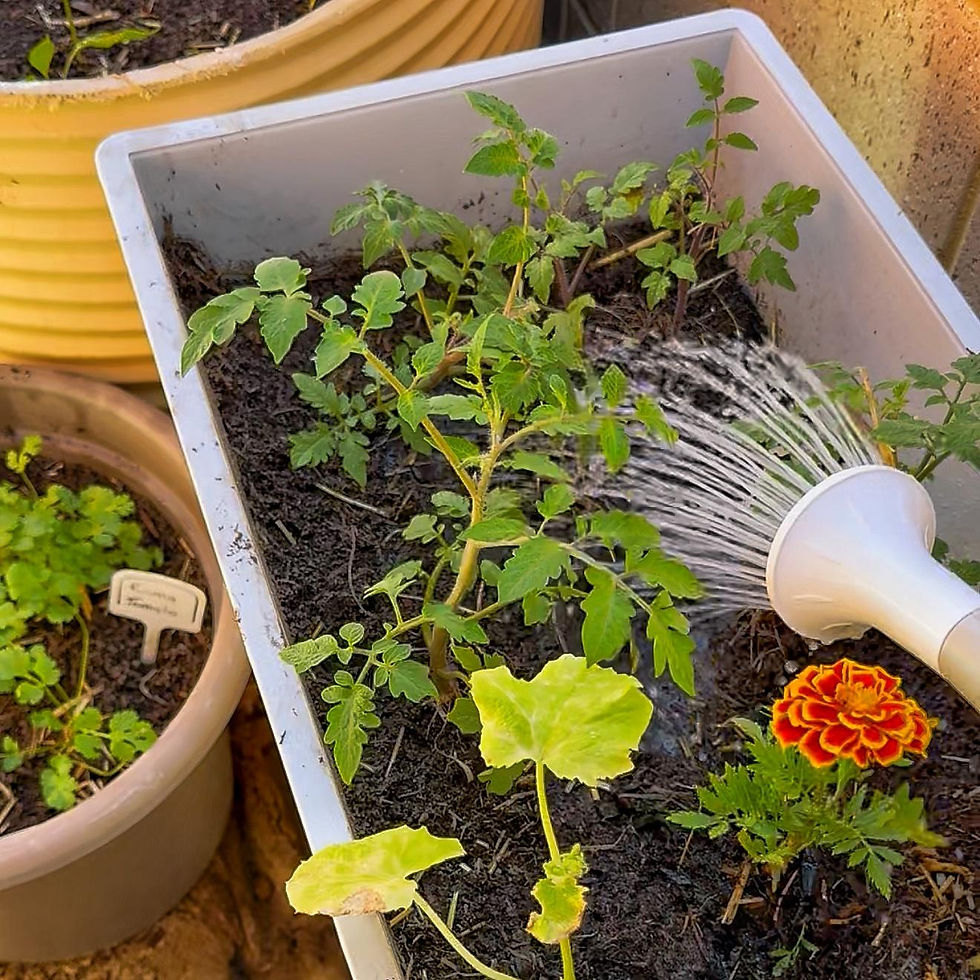
For the mixture, I combined 10ml of neem oil with 1 litre of warm water, first blending the measured oil with a bit of dish soap to help it mix with the water. The mixture turned a milky white when combined, I carefully poured approximately 9 litres over the garden beds, taking care to avoid contact with the leaves due to the risk of sunburn. When some leaves did get sprayed, I rinsed them with tap water as a precaution.
Step Three: Feeding and Rejuvenating the Beds
The third step was to replenish the soil at the top of the beds. Upon removing the straw, I spotted root hairs above the soil’s surface, suggesting the plants were struggling to find what they needed below ground. This sightly disheartening, and I resolved to help by adding a nourishing layer on top.
I blended gardening soil and mushroom compost in a 30:70 ratio, then spread a thin layer about 5 cm thick over the beds. This covered the exposed roots and, during watering, would allow the plants to benefit from the nutrients in the compost runoff.

Step Four: Mulching for Protection and Nutrition
For the final step, I applied lupin mulch across the garden beds and pots. Lupin mulch is a fantastic addition, offering a wide range of benefits. It breaks down naturally, acting as a fertiliser that releases nitrogen, potassium, calcium, and phosphorus into the soil. Additionally, lupin mulch helps suppress weed growth, conserves water and keeps the soil cooler by 5°C to 10°C during hot weather. Its coarse texture and small pieces made it easy to spread around even the smallest seedlings.
Reflection and Appreciation
After gently watering the garden to avoid washing away the neem oil, I stepped back and took stock of the five hours of effort invested. The sense of accomplishment was deep. Tending to the Sliver and Bite urban garden is a rewarding experience, and I anticipate that satisfaction will only grow when I’m able to harvest and cook with the herbs and vegetables nurtured here.

Comments